Jérôme Massier fils (1850-1916)
Download PDFJérôme Massier fils is, with his cousins Clément and Delphin, one of the three great names of Vallauris art ceramics at the end of the nineteenth century. Where Clément gave his name to metallic lustre and Delphin to his large planters, Jérôme was above all the head of a manufactory: one that widely distributed, under an easily recognisable signature, vases, cachepots and planters with floral and naturalistic decoration.
One name, two Jérômes
The first name is a source of confusion. Jérôme Massier (1820-1909) headed one branch of the family. His son, born Jean-Baptiste Massier in 1850, took his father's first name as his professional name and signed his pieces "Jérôme Massier fils", to set himself apart while keeping the standing of the brand. It is these pieces, dating from the late nineteenth and early twentieth centuries, that are most often met under the name Jérôme Massier.
Jérôme fils was the cousin of Clément and Delphin Massier, the sons of Jacques Massier, with whom he formed one of the "major productions of Vallauris". The history of this dynasty and of the artistic revival of the town is told in the entry on Vallauris ceramics.
A manufactory in Vallauris
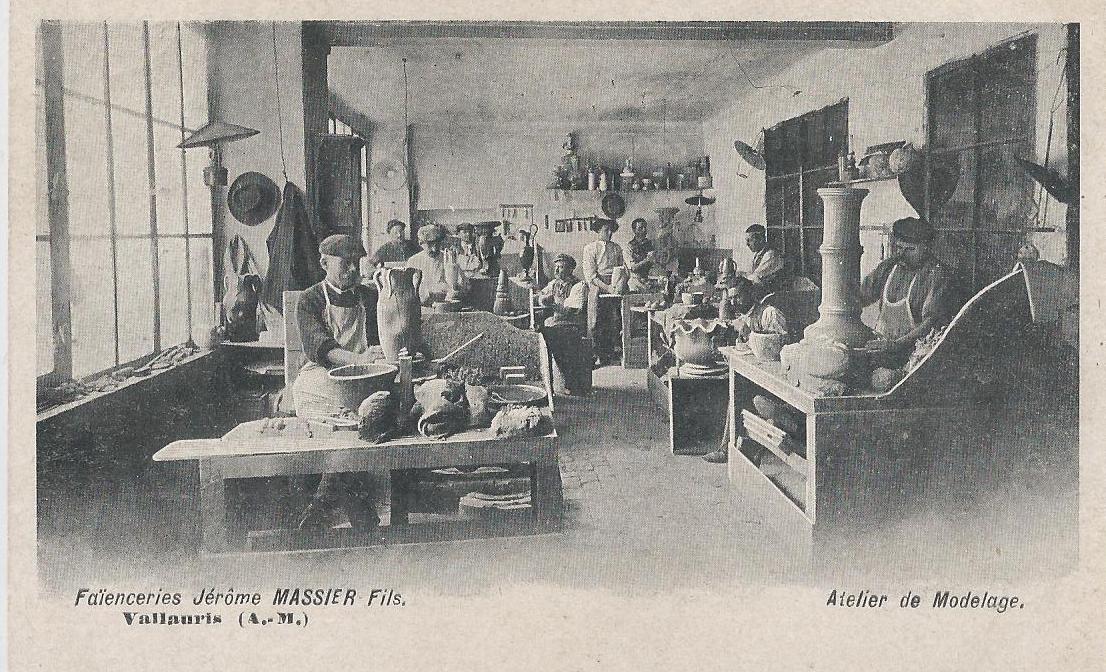
Jérôme fils ran an art pottery manufactory in Vallauris, the interior of which is shown on an old postcard held by the MUCEM in Marseille (Vallauris — Manufacture de poteries d'art Jérôme Massier fils — Un atelier de modelage): workers in aprons and caps, bent over their tables, modelling clay. The image recalls what art ceramics were at that time: an organised workshop activity, in which models were reproduced and varied rather than conceived piece by piece.
A production devoted to naturalistic decoration
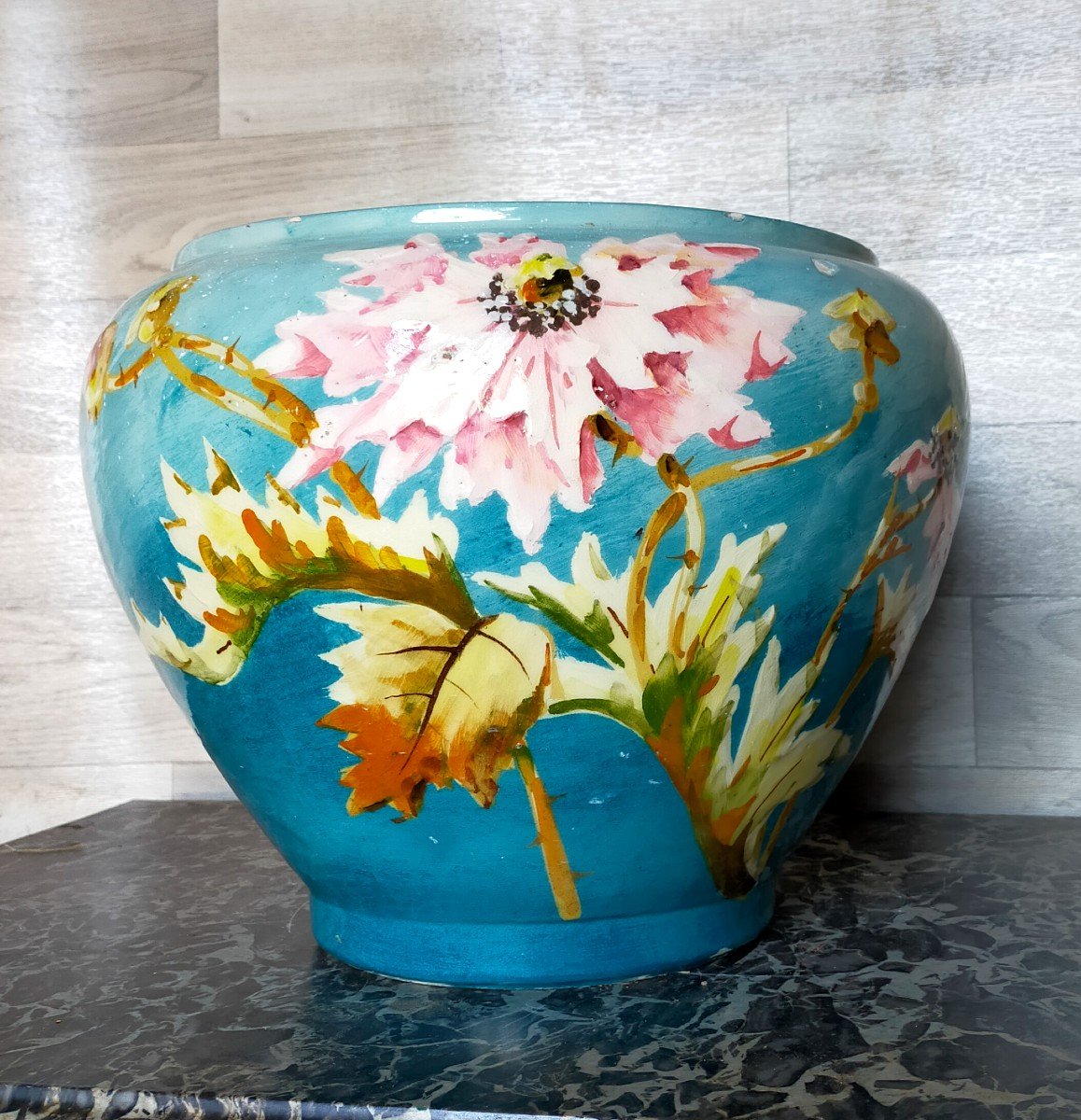
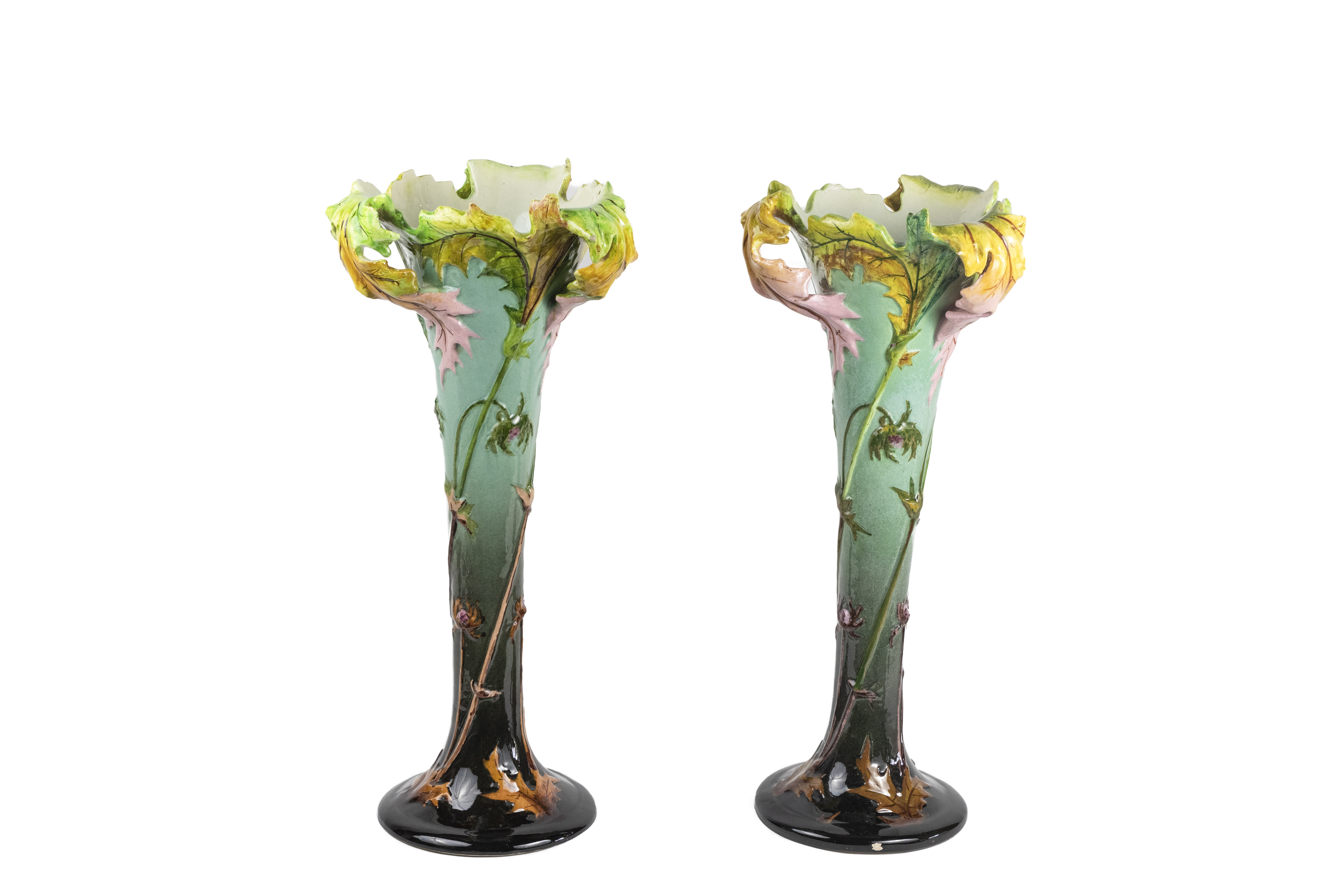
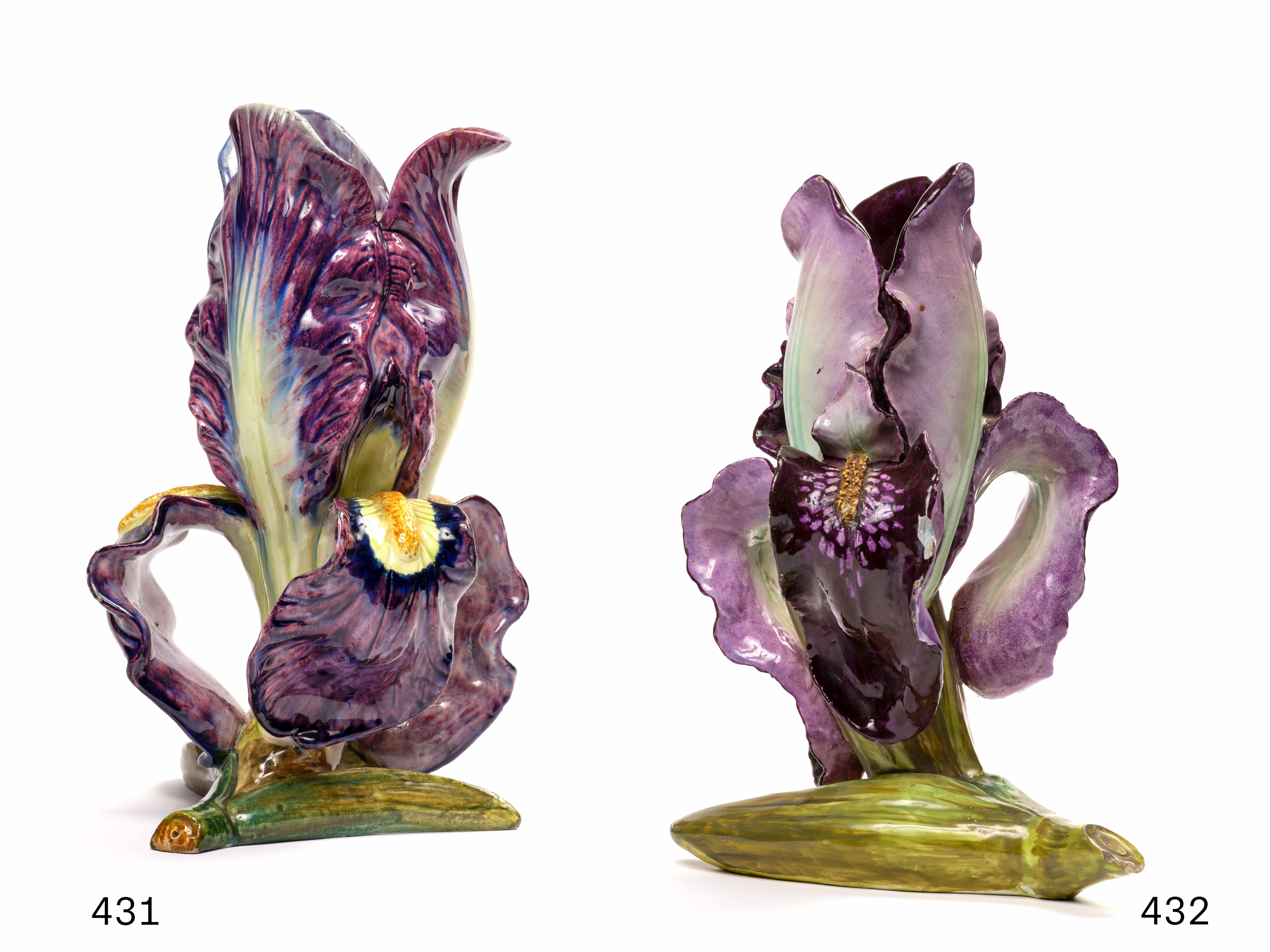
The pieces of Jérôme Massier fils belong to the naturalistic taste of the late century, close to Art Nouveau. They include vases, cachepots and planters in enamelled earthenware, with floral decoration — irises, thistles, carnations, bouquets on plain grounds — treated in polychrome enamels. Some models are in barbotine: the decoration is modelled in relief with liquid clay slip, then covered in coloured enamels, which gives the iris or the flower real volume.
This production was aimed at a bourgeois clientele, for whom the cachepot and the planter were part of the decoration of the drawing room, the vestibule or the winter garden.
Signatures
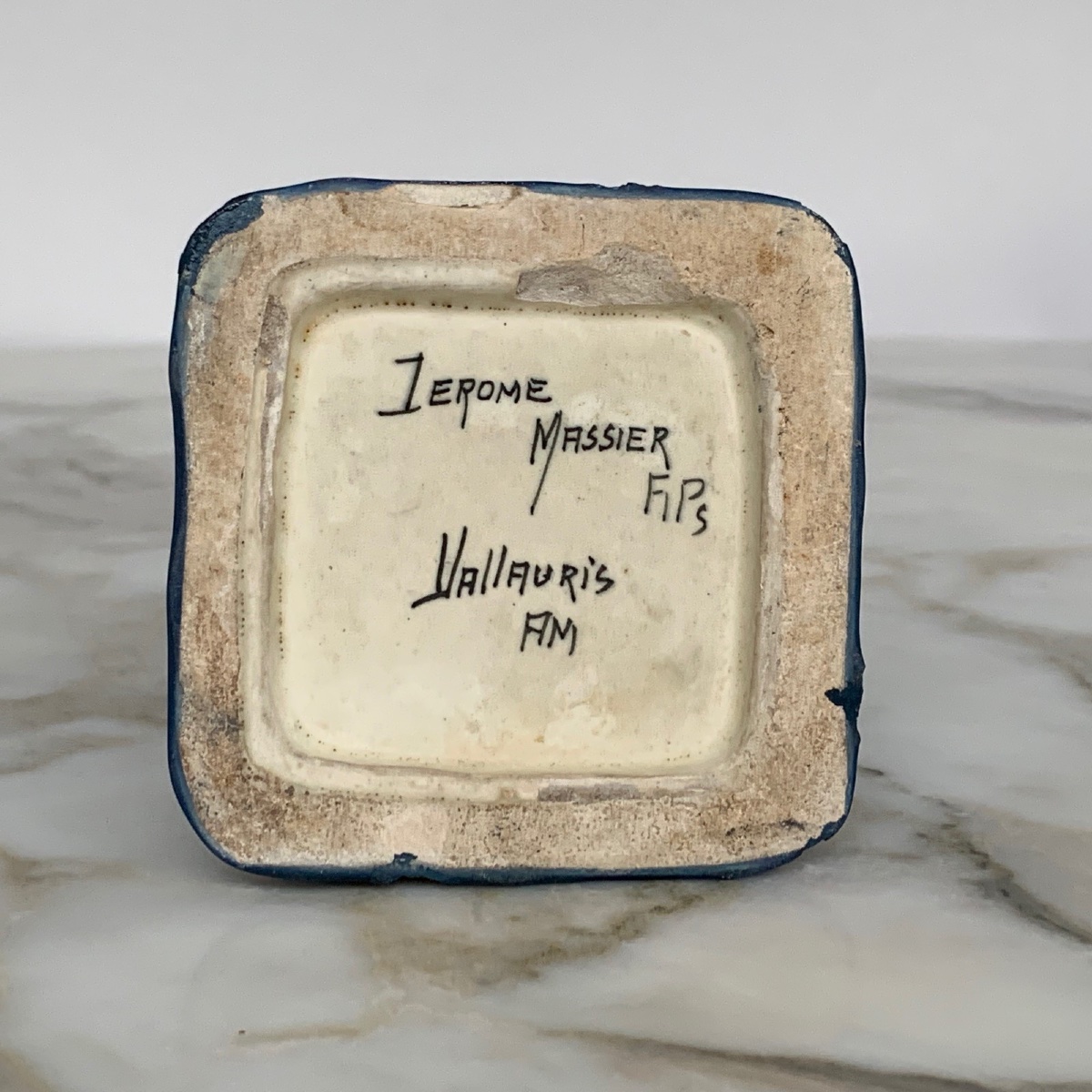
The pieces most often bear, on the underside or near the base, the inscription Jérôme Massier fils Vallauris. The signature, in relief or in enamel, together with the town name, is characteristic of the house.
Legacy
Jérôme Massier fils died in 1916. The manufactory that bore his name continued its activity in the twentieth century. His pieces circulate today in public sales, where they stand alongside those of Clément and Delphin: three complementary approaches, from technical invention to workshop production, that made Vallauris a centre of art ceramics before the Picasso era.
See also
Vallauris — Clément Massier — Delphin Massier — Art Nouveau — The Gréber family — Émile Müller
See our ceramics, faience and porcelain
Bibliography
Entries and documentary resources
Town of Vallauris Golfe-Juan, "La céramique artistique" — the role of the three Massiers in the shift from utilitarian pottery to art ceramics.
Vallauris Golfe-Juan tourist office, entry "The Massiers".
French Ministry of Culture, POP database (Joconde), entry 5002C003369: Vallauris — Manufacture de poteries d'art Jérôme Massier fils — Un atelier de modelage, postcard, MUCEM, Marseille.
Auction catalogues
Ader, Paris, lot 72: Jérôme Massier fils (1850-1916, Jean-Baptiste Massier, known as), naturalistic vase in polychrome barbotine, mark Jérôme MASSIER Fils Vallauris.
Pousse-Cornet, lot 189: Jérôme Massier (1850-1916), large earthenware cachepot, signed on the underside Jérôme Massier fils Vallauris.
Public collections
MUCEM, Marseille — collection of documentary postcards on the Vallauris manufactories.