menu
Menu
account_box
Categories
Contact
email Send us a message

Contact

phone By phone

+33 (0)1 42 25 12 79
Tue.-Sat., from 10am to 6pm
+33 (0)6 60 62 61 90
Everyday from 9am to 7pm.

email by Email

Adress: contact@marcmaison.com

share Let's get social

Languages
And also...
My selection
(45 Objects)

My selection (45 Objects)


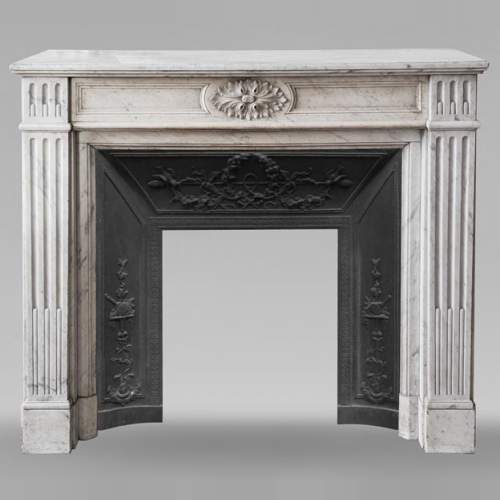
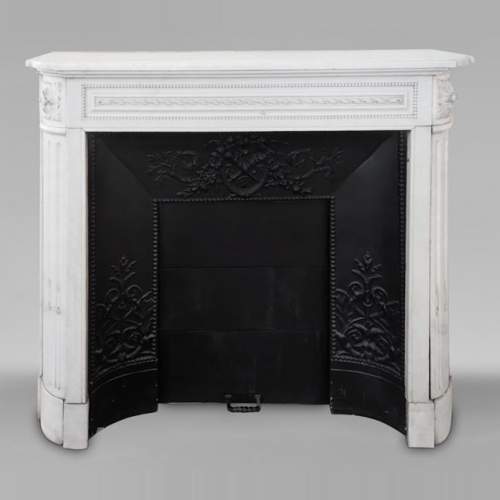
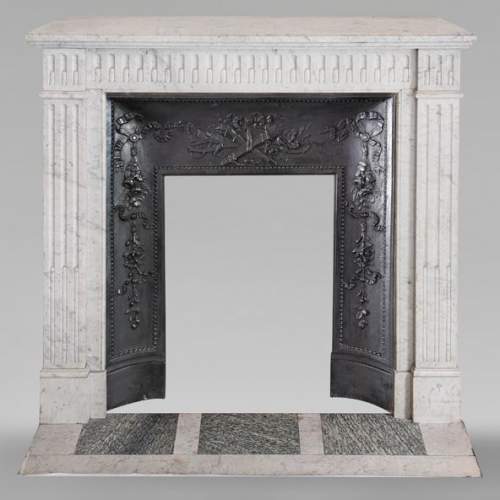
Louis XVI style mantel adorned with interlacing flowers in Sienna Brocatelle.

Dimensions:
Width: 149 cm
Height: 102 cm
Depth: 42 cm
Inner width: 110 cm
Inner height: 70 cm

Louis XVI style wood mantel decorated with a mythological scene

Dimensions:
Width: 128 cm
Height: 249 cm
Depth: 12 cm
Inner width: 45 cm
Inner height: 54 cm

Mathurin Moreau for the Val d’Osne foundry, The Flower Fairy, late 19th century

Ref.14982
Mathurin Moreau for the Val d’Osne foundry, The Flower Fairy, late 19th century

This cast-iron sculpture was created by Mathurin Moreau for the Val d'Osne foundry, with which he collaborated, at the end of the 19th century. It depicts a winged young girl being led by a cherub. The composition of the sculpture is complex: the woman is seated in the form of an Amazon; her naked body forms a circular arc, her arm raised above her intertwining with long garlands of flowers. These link her to the cherub, who seems to be dragging the fairy through them, setting the whole composition in motion. The sculptor paid great attention to detail: the simple headband on the woman's head, the modest drape over her thigh and falling over the base, and the cherub's hair pulled back by the wind give the composition its liveliness. The sculpture's imposing pedestal is in harmony with it. It is divided into several compartments, the inside of which is decorated with floral motifs and various symbolic objects: two recorders forming an aulos (ancient wind instrument) accompanied by small birds, embodying harmonious music; a panpipes associated with grapes evoking the world of Dionysus; a sheaf of wheat and tools symbolising agriculture; a theatrical mask and a fool's hat with a tambourine and a curtain representing the performing arts. The sculpture of the Flower Fairy is shown in the catalogue of the Val d'Osne foundry (on plate 583), as is its pedestal, independently (on plate 570 bis). The combination of the two works was therefore the result of a desire on the part of the patron, who imposed his own taste on the commission. The Museum of Fine Arts in Houston owns a copy of the Flower Fairy identical to our own. Mathurin Moreau also created another Flower Fairy, a statuette. This one is a young woman in a dancing posture, whose nudity is emphasised rather than concealed by a wet drape around her body. This very delicate figurine echoes the larger but no less elegant bronze sculpture.

Dimensions:
Height: 265 cm

Louis XIV style mantel in Rouge de Rance marble adorned with bronze ornaments

Dimensions:
Width: 135 cm
Height: 120 cm
Depth: 36 cm
Inner width: 93 cm
Inner height: 85 cm

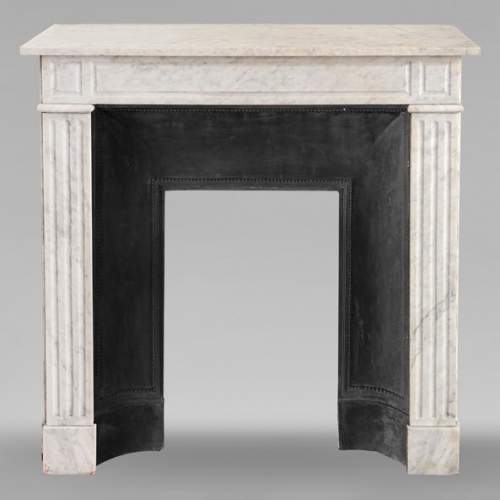
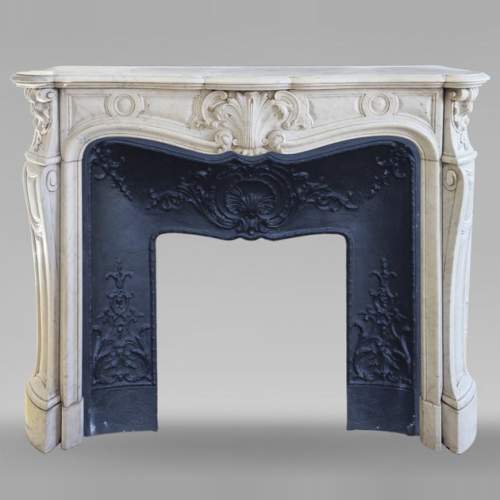
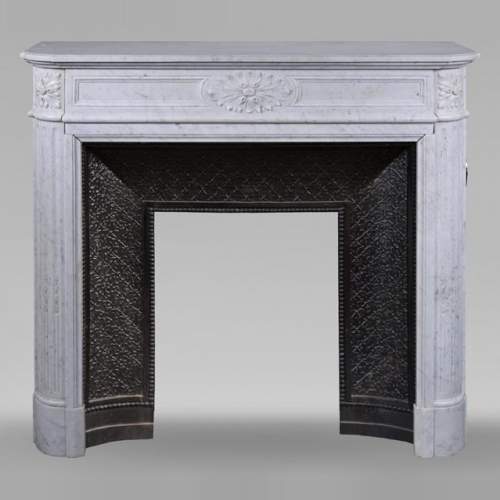
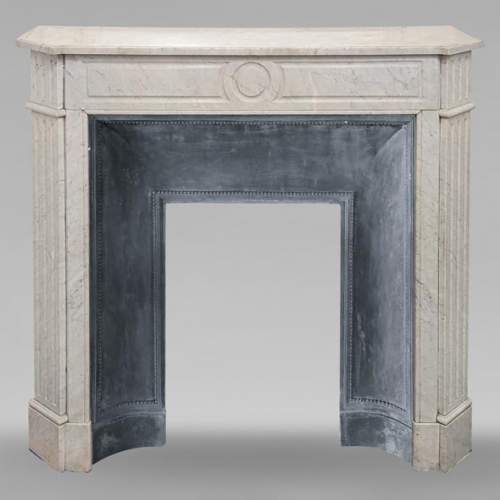
Louis XVI style mantel with rounded corners and carved sunflower in cristaline marble

Dimensions:
Width: 125 cm
Height: 103 cm
Depth: 36 cm
Inner width: 88 cm
Inner height: 84 cm

Louis XIV style mantel with acroterion in Rouge du Nord marble

Dimensions:
Width: 145 cm
Height: 126 cm
Inner width: 111 cm
Inner height: 94 cm

Victor BALTARD, Medallion from the Wheat and Flour Pavilion of the Paris Central Market, circa 1860

Ref.15673
Victor BALTARD, Medallion from the Wheat and Flour Pavilion of the Paris Central Market, circa 1860

This medallion is one of the only bas-reliefs to have been preserved after the destruction of the Halles centrales of Paris in 1971. This exceptional rediscovery now brings the number of original medallions still existing and located to four. The first, with the coat of arms of Paris, is in the collections of the Carnavalet Museum. Two other copies had been saved by Mr. Crucy, contractor in the destruction of the Halles in 1971, and were sold in 2022: one identical to that of the Carnavalet and the other representing an allegory of wheat. Finally, the only counterpart of the latter is the medallion that we present here; the fourth and final bas-relief found. Together, these two allegories of wheat decorated the entrance to the Pavilion of Wheat and Flour above which culminated a third bas-relief, with the coat of arms of Paris. Ce médaillon en alliage métallique présente en son centre une femme drapée à l’antique tenant de sa main droite une botte d’épis de blé. La figure centrale est entourée de part et d’autre de cornes d’abondance, symbolisant le foisonnement de produits qui pouvaient être trouvés dans ces Halles historiques. Le Pavillon au blé et à la farine était essentiel puisque c’était là qu’une grande partie des Parisiens et des commerçants (restaurateurs, boulangers, pâtissiers) venaient se fournir pour faire leur pain ou leurs pâtisseries. En 1848, un concours fut organisé pour trouver l’architecte qui aurait la charge de construire les nouvelles Halles de Paris. La décision se porta sur Victor Baltard (1805-1914), architecte déjà reconnu puisqu’il avait entre autres remporté le Prix de Rome 15 ans plus tôt. S’il était prévu que les Halles soient construites en pierre, Napoléon III en changea les plans au profit d’une structure en métal après une visite sur le chantier en 1853. Fasciné par le Crystal Palace de Londres inauguré en 1851 pour l’Exposition universelle, Napoléon III était devenu un fervent promoteur de cette nouvelle architecture en France. C’est la Fonderie de Mazières et Bourges qui fut en charge du projet. Les Halles, qualifiées de « Ventre de Paris » par Emile Zola, sont aujourd’hui encore l’oeuvre la plus reconnue de Victor Baltard, une institution qui reste emblématique plus de 50 ans après sa disparition. Chacun des 12 pavillons des Halles était ouvert par une porte monumentale de 20 mètres de haut ornée de trois médaillons. Comme évoqué plus haut, les armes de Paris étaient toujours placées dans le médaillon sommital, tandis que les deux autres représentaient la marchandise dudit pavillon. Le bas-relief que nous vous présentons ici est donc le second et dernier exemplaire existant de médaillon représentant le blé qui ait orné le Pavillon au blé et à la farine.

Dimensions:
Depth: 100 cm