menu
Menu
account_box
Categories
Contact
email Send us a message

Contact

phone By phone

+33 (0)1 42 25 12 79
Tue.-Sat., from 10am to 6pm
+33 (0)6 60 62 61 90
Everyday from 9am to 7pm.

email by Email

Adress: contact@marcmaison.com

share Let's get social

Languages
And also...
My selection
(19 Objects)

My selection (19 Objects)


Fountain center model "Fontana delle Tartarughe", XIX century

Ref.14654
Fountain center model "Fontana delle Tartarughe", XIX century

Fountain named after Pope Alexander VII, featuring at its center a triton surrounded at its feet by four basins representing seashells, resting on a base. On the latter, a dedication is inscribed, divided into four cartouches surrounded by motifs, placed between each basin. The triton is depicted kneeling, the body turned to the left, his left arm raised upwards, his right arm in the same position, the palm open to the sky. This posture suggests that originally he was supposed to hold an element in his two hands (a large bowl, perhaps?) adding another level to the fountain. On the pedestal, cartouches bear inscriptions in Latin, the translation of which can be provided as: "ANNO PONTIFIC IV ALEXANDER VII RESTAURAUIT ORNAVITQUE," which can be translated as: "In the 4th year of the pontificate, Alexander VII restored and adorned." Alexander VII (1599-1667) was Pope from 1655 until his death in 1667. The model of the fountain (the base) as well as the text inscribed in the cartouches closely resemble the Turtle Fountain in Rome, located in Piazza Mattei, the design of which was drawn by Giacomo della Porta in 1582, and the bronzes executed by Tadeo Landini, the whole completed in 1585. The figures were originally supposed to hold dolphins in their hands, but these were never placed on the fountain due to water pressure. In 1658, during the pontificate of Alexander VII, the existing fountain was restored and transformed, with the addition of turtles, which are believed to have been sculpted by Bernini. Bibliography : Steven Ostrow, "Collecting Copies of 'the most charming fountain in Rome'. Taddeo Landini's Fontana delle Tartarughe".

Dimensions:
Width: 107 cm
Height: 60 cm
Depth: 107 cm

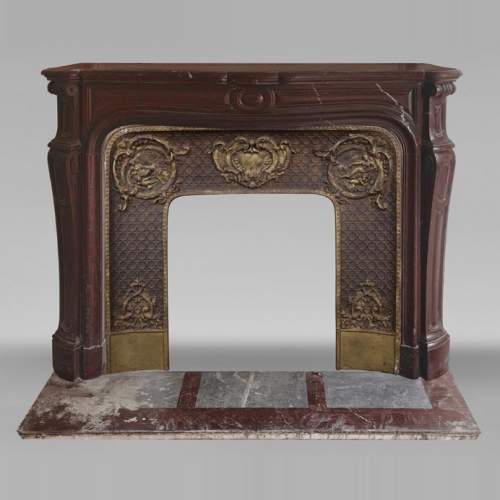
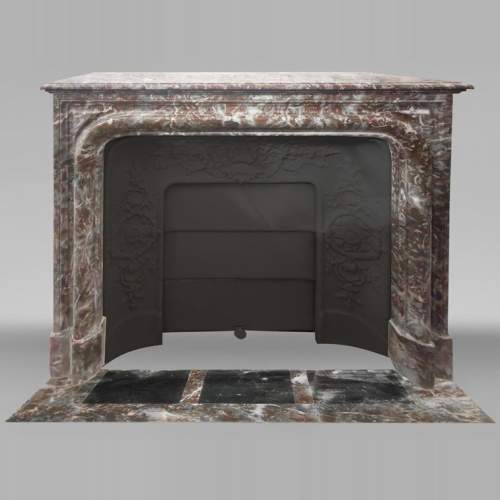
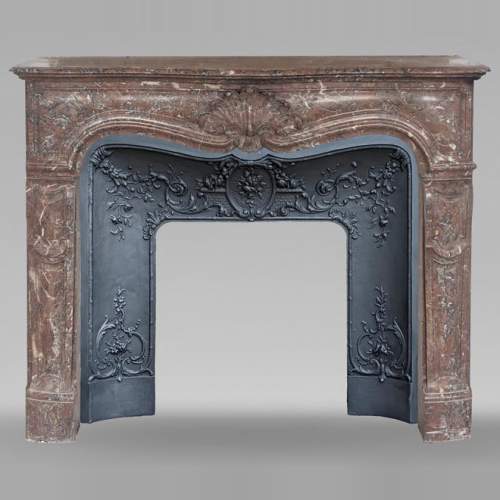
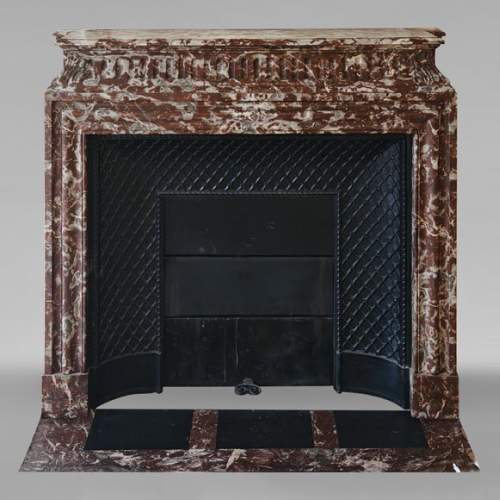
Louis XIV style Bolection mantel in Rouge Griotte marble

Dimensions:
Width: 136 cm
Height: 109 cm
Depth: 35 cm
Inner width: 99 cm
Inner height: 89 cm

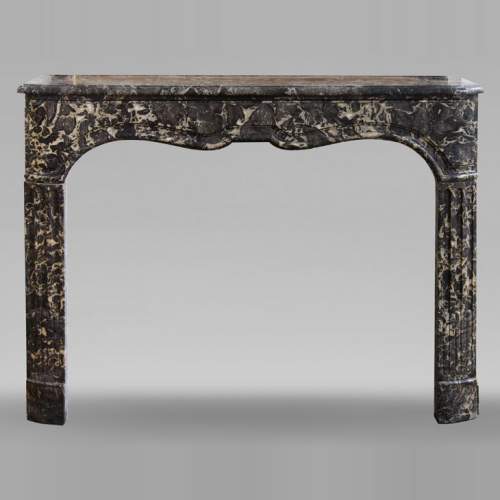
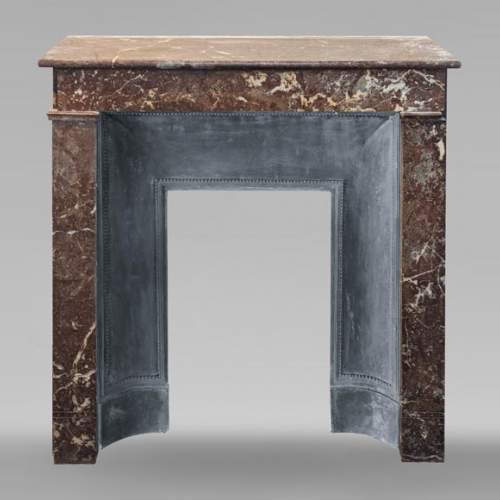
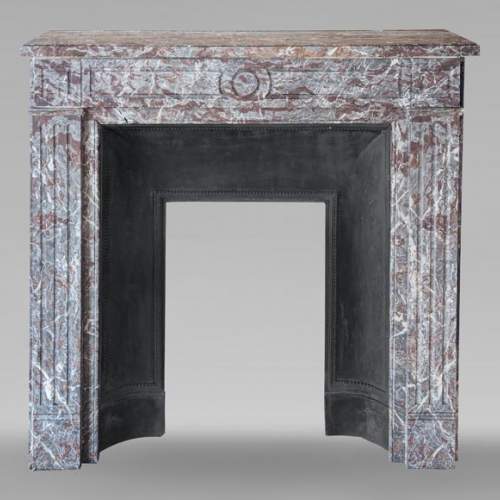
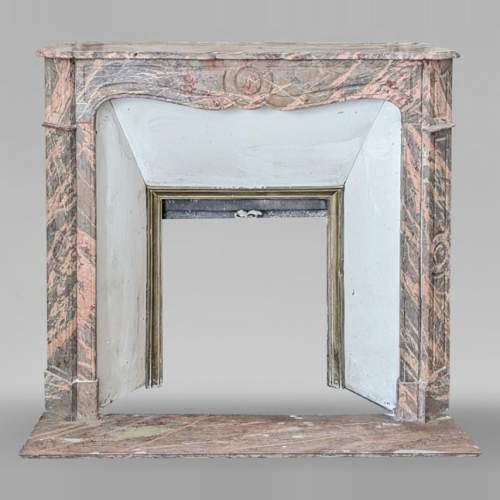
Louis XVI style mantel in Rouge du Nord marble

Dimensions:
Width: 106 cm
Height: 100 cm
Depth: 30 cm
Inner width: 65 cm
Inner height: 80 cm

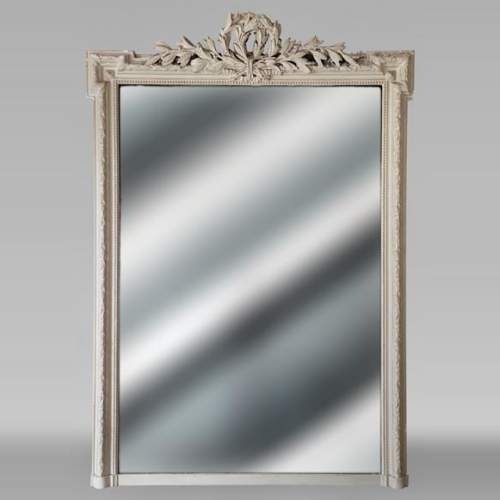
Louis XVI style trumeau decorated with a plant crown

Dimensions:
Width: 130 cm
Height: 192 cm
Depth: 20 cm
Inner height: 180 cm

Louis XVI style gilded trumeau decorated with pearls

Dimensions:
Width: 109 cm
Height: 143 cm
Depth: 5 cm

Ingé & Soyer, Bronze representing Hercules and Lichas after the model by Canova, bronze, circa 1834

Ref.10567
Ingé & Soyer, Bronze representing Hercules and Lichas after the model by Canova, bronze, circa 1834

This group depicting Hercules and Lichas was inspired by Canova's famous model of Hercules holding the body of Lichas in a dynamic, organic composition. Sculpted in marble, it was completed in 1815 and soon displayed in the palace of the Marquis of Torlonia. The first bronze editions of this group in France are closely linked to the presence of a preliminary model, probably in terracotta, in Paris. This sculpted group recounts an episode from Greek mythology. Lichas, a companion of Heracles (Hercules), is asked by Dejanira to give Heracles a poisoned tunic that consumes him as soon as he puts it on. Feeling his own body being consumed, Heracles blames Lichas and throws him into the sea. From 1831, Ingé and Soyer, working together, exhibited one of their castings of the group of Hercules and Lichas after Canova at the 1834 Exposition des produits de l'industrie française, alongside other sand castings which won them a silver medal. Their exhibition received rave reviews from the Central Jury, which, in its report published in 1836, stated: "We owe Mr Ingé and Mr Soyer products that are no less remarkable for the perfection of sand casting than for the work of chasing. We should be grateful for the efforts they have made to simplify the work of the chiseller. Of particular note are Canova's Hercules group, the Magdalene by the same sculptor, a reduction of Michelangelo's Moses, and representations of animals that the chisel and file have barely touched. The importance of these products and their variety merit a silver medal". Bibliography : Baron Charles Dupin, Rapport du Jury Central sur les produits de l'industrie française exposés en 1834, Paris, 1836, t. 3, p. 140. Geneviève Lacambre, De l'usage de la sculpture par les peintres: Gustave Moreau regarde Canova, La sculpture au XIXe siècle, Mélanges pour Anne Pingeot, 2008, p. 167.

Dimensions:
Width: 22 cm
Height: 43 cm
Depth: 23 cm

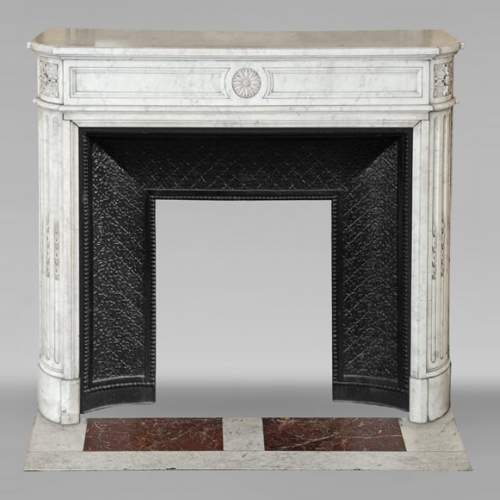
Louis XVI style fireplace with fluted decoration in Arabescato marble

Dimensions:
Width: 126 cm
Height: 108 cm
Depth: 38 cm
Inner width: 91 cm
Inner height: 91 cm

Louis XVI style trumeau with pearl decoration

Dimensions:
Width: 111 cm
Height: 163 cm
Depth: 5 cm

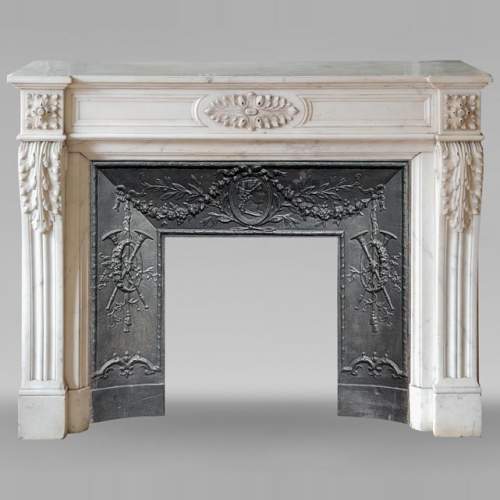
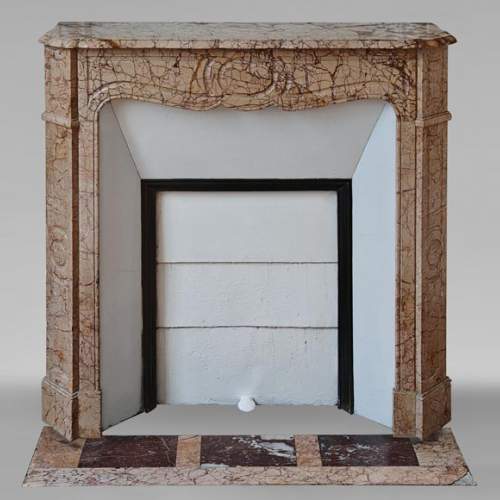
Louis XVI style fireplace in semi-statuary marble, decorated with a sunflower

Dimensions:
Width: 125 cm
Height: 106 cm
Depth: 35 cm
Inner width: 84 cm
Inner height: 88 cm